Device Buyers Guide

Choosing the right XR device

Seventeen current devices across eleven manufacturers — from $299 training headsets to certified industrial AR and AI wearables. Learn what each one is for, where it fits in enterprise XR programs, and how ArborXR manages it.

Download the PDFSee all supported devices
17Current devices
11Manufacturers
4Use cases
1Dashboard

What are you trying to do with XR?

Seventeen current devices split across four key use cases. Jump to the section covering the devices best suited for the job.

01

VR Training at Scale

Immersive learning, simulation, and skills development delivered to a workforce at volume.

8 devices
02

Remote Assist & Guided Work

Hands-free field assistance, remote expert streaming, guided workflow overlays, and all-day AI wearables.

6 devices
03

Visualization & Design

Spatial computing, 3D model review, and digital twin collaboration at a desk or workstation.

2 devices
04

Optical AR & HoloLens 2 Migration

HoloLens 2 support ends December 31, 2027. Magic Leap 2 is no longer sold. Plan your migration now.

2 devices

Specifications and pricing are current as of publication. Prices in USD — verify all pricing before procurement.

Use case 1 of 4

VR Training at Scale

Standalone VR headsets for immersive learning, simulation, and skills development delivered to a workforce at volume. Eight devices from Meta, PICO, and HTC VIVE.

Meta Quest 3S standalone VR headset

Meta · VR headset · Standalone

Meta Quest 3S

Starting at $299 USD

Entry-level standalone VR on the Snapdragon XR2 Gen 2 platform — the same chip as Quest 3 in a smaller, lower-cost body. The default starting point when training volume matters more than optics.

Best for

  • Large training rollouts where cost per unit is the constraint
  • Multi-site programs standardizing hundreds of devices
  • 360° video and interactive VR training content

Look elsewhere if

  • You need eye, face, or precision hand-gesture tracking
  • Data governance rules out the Meta consumer ecosystem
  • Content is simulation-grade or design visualization

Key specs

ChipsetXR2 Gen 2
Display1832 × 1920 / eye
LensesLCD / Fresnel
Battery~2.5 hours
Tracking6DoF + hand
Weight~514 g
StandaloneHMS enrollmentColor passthrough
ArborXR management

Enrolls via Meta Horizon Managed Services (HMS). App deployment, device policies, launcher and kiosk mode, remote wipe and lock, fleet visibility, usage analytics.
Meta Quest 3 standalone VR headset

Meta · VR headset · Standalone

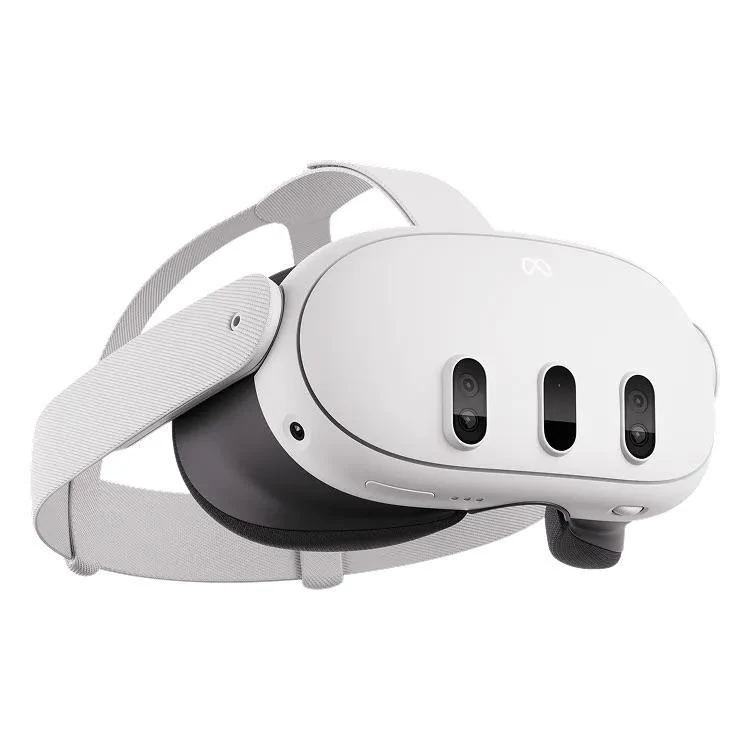
Meta Quest 3

Starting at $499 USD

Standalone VR with pancake lenses and higher per-eye resolution than the 3S, on the same XR2 Gen 2 processor. The step up when content quality justifies the cost per unit.

Best for

  • Programs where visual fidelity affects engagement
  • Mixed reality pilots using full-color passthrough
  • Teams wanting 3S-level management with better optics

Look elsewhere if

  • Eye or face tracking is required
  • Meta ecosystem governance is a concern
  • The $200 per-unit gap matters across a large fleet

Key specs

ChipsetXR2 Gen 2
Display2064 × 2208 / eye
LensesPancake
Battery~2.2 hours
Tracking6DoF + hand
Weight~515 g
StandaloneHMS enrollmentColor passthrough
ArborXR management

Enrolls via Meta Horizon Managed Services (HMS). App deployment, device policies, launcher and kiosk mode, remote wipe and lock, fleet visibility, usage analytics.
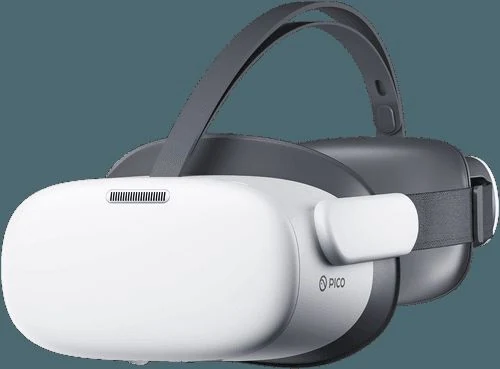
PICO G3 standalone VR headset

PICO · VR headset · Standalone

PICO G3

Starting at $299 USD

Entry-level standalone VR from PICO: XR2 Gen 1, 2160 × 2160 per eye, roughly 3 hours of battery. No native enterprise MDM — managed through Android Enterprise. Comes with 1 controller.

Best for

  • 360° video and passive viewing
  • Educational and non-regulated training programs
  • Deployments where cost per unit drives the decision

Look elsewhere if

  • IT or legal require a hardware company with native MDM
  • Training is safety-critical or regulated
  • You need a current-generation device — PICO G3 is end of life; see PICO 4 Ultra Enterprise

Key specs

ChipsetXR2 Gen 1
Display2160 × 2160 / eye
Battery~3 hours
MDMAndroid Enterprise only
Tracking3DoF + hand
Weight~578 g
StandaloneAndroid EnterpriseBudget tierEnd of lifeProcure through channel
ArborXR management

Enrolls via Android Enterprise. App deployment, device policies, launcher and kiosk mode, remote wipe, fleet visibility, usage analytics. For IT-governed deployments, we recommend PICO 4 Ultra Enterprise.

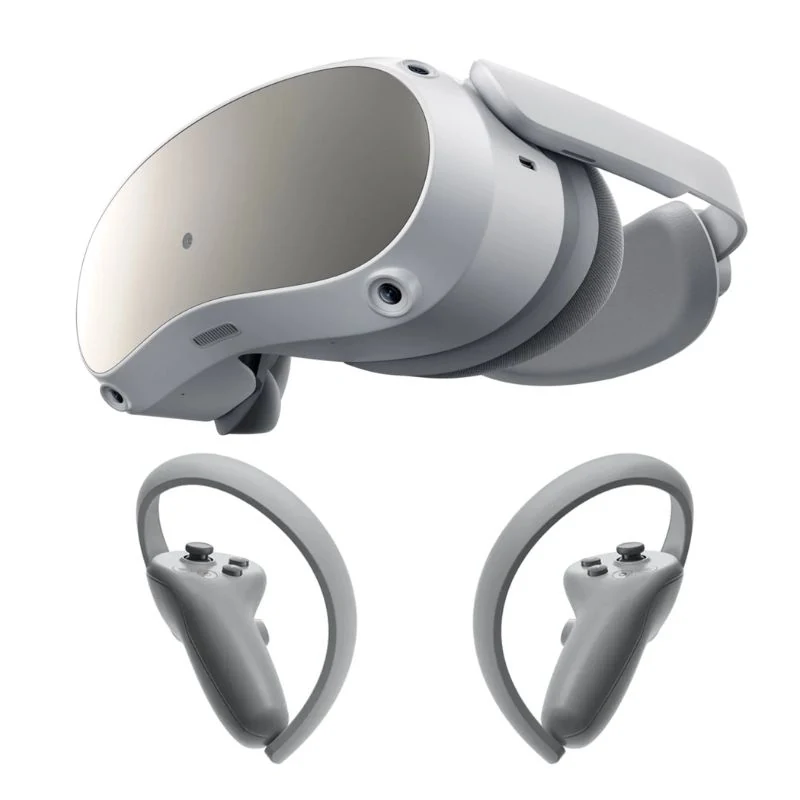
PICO 4 Enterprise VR headset with controllers

PICO · VR headset, enterprise · Standalone

PICO 4 Enterprise

Starting at $649 USD

The previous-generation PICO enterprise standalone: XR2 Gen 1, native enterprise MDM, 2160 × 2160 per eye, and a 3-hour battery. Still actively sold and relevant where the Ultra’s spec step-up is not required.

Best for

  • Existing PICO 4 Enterprise fleets standardizing on one hardware generation
  • Enterprise programs needing native MDM without Wi-Fi 7 or 32MP cameras
  • Deployments where fleet consistency matters more than the latest generation

Look elsewhere if

  • It is a new deployment — the Ultra adds real value at a similar price
  • The program needs Wi-Fi 7 streaming or 32MP mixed reality cameras

Key specs

ChipsetXR2 Gen 1
Display2160 × 2160 / eye
Battery~3 hours
Wi-FiWi-Fi 6
Weight~581 g
StandaloneAndroid EnterpriseFleet expansionDiscontinued
ArborXR management

Full Android Enterprise support. App deployment, device policies, launcher and kiosk mode, remote wipe, fleet visibility, usage analytics. For new deployments, the PICO 4 Ultra Enterprise offers better specs at a similar price.

Ready to experience the future of training?

Connect with an ArborXR solutions specialist today.