
Transforming Manufacturing with VR Training
See how the most forward-thinking ops and L&D leaders use VR to upskill workers, reduce errors, and build safer, more productive teams.
Learn How to Get Started in VR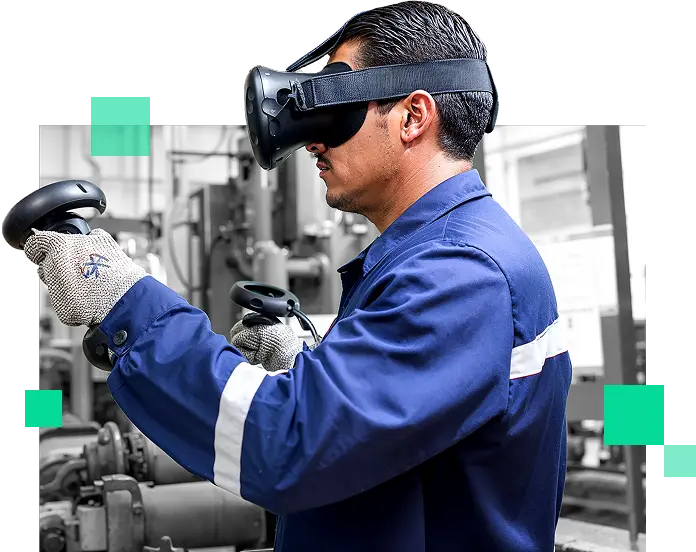
New Hire Training and Ongoing Education are Expensive
VR and AR deliver positive ROI for a fraction of the cost of traditional methods by improving:
Innovate Workforce Training for a New Era in Manufacturing
If your biggest challenge is keeping your workforce trained on emerging equipment, evolving processes, or new digital technologies, then you’re not alone.
The future of manufacturing requires a new approach to training and talent development. XR enables manufacturers to transition from reactive training to continuous up-skilling at scale

Rethink Traditional Workforce Models
Organize your workforce around evolving roles and critical tasks then build training programs that support this dynamic structure.

Inventory Existing Skills
Many manufacturers haven’t mapped the current capabilities of their teams. Start with what you have. Understanding your workforce baseline helps prioritize where training is needed most.

Design Roles for Continuous Learning
Build learning paths that are flexible, repeatable, and scalable and make sure hiring criteria reflect the skills required today and tomorrow.

Evolve with XR
XR enables hands-on learning in a safe, repeatable environment. Whether you're teaching someone to operate new machinery or practice safety protocols, immersive training builds confidence and muscle memory faster than traditional methods.
Get Clear on What It Takes to Launch XR Training
Deploying XR training in manufacturing sounds exciting until you run into questions about headsets, content, management, and change adoption. That’s where most teams stall.
Instead of guessing your way forward, use our Quick Guide for New VR Pilot Programs to see exactly how successful deployments begin.
The Problem
XR Training in Manufacturing Makes Sense On Paper, but Deploying is Another Story
Companies Believe XR Technology Can Be Used in all Phases of the Manufacturing Workstream, Including:

Quality Control by 40%

Design and Prototype Products by 39%

Encouraging Remote Collaboration by 35%

Improving Customer Engagement And Sales by 33%
“ArborXR provides so much detail—when a headset was last used, what simulations are on it—everything we need to keep our training program running smoothly.”
Training Manager
Mars Wrigley

“One of the more dramatic examples that we have of the impact that VR can have in a business is manufacturing training, or reduction of time to proficiency by 50 to 70%. When you’re taking six months to train somebody and then you can turn that into several weeks, that’s a tangible operational difference for businesses.”
Operations Transformation Product Leader
INVISTA, a Koch Industries subsidiary

Trusted By Leaders in Manufacturing
After supporting XR training rollouts at some of the world’s largest manufacturing companies, we know what works and what goes off the rails.
Why XR + Manufacturing?
From boosting efficiency to elevating safety, XR redefines how manufacturers approach day-to-day tasks, leading to a more productive and resilient manufacturing process.

Bridging the Skills Gap
With 2.1 million manufacturing jobs likely to go unfilled by 2030, XR helps you onboard and upskill faster.

Improved Accuracy & Precision
XR can display an image of a correctly assembled product alongside the real product, allowing workers to compare the two and ensure that all components are properly aligned.

Enhanced Safety
AR provides crucial safety information and alerts, minimizing the risk of accidents and creating a safer work environment.

Increased Productivity & Reduced Downtime
By streamlining processes and offering instant access to information, quick access to troubleshooting data, and maintenance guides helps minimize downtime and keeps operations running smoothly.
Need XR Training Content Built for Your Business?
Launching XR training requires more than the right devices and management platform—you also need content that’s specific to your machines, processes, and people.
That’s why ArborXR partnered with Futurus to offer XRI (XR Instruction), a content creation service for manufacturing teams looking to turn their SOPs, machine operations, or safety protocols into interactive VR training.
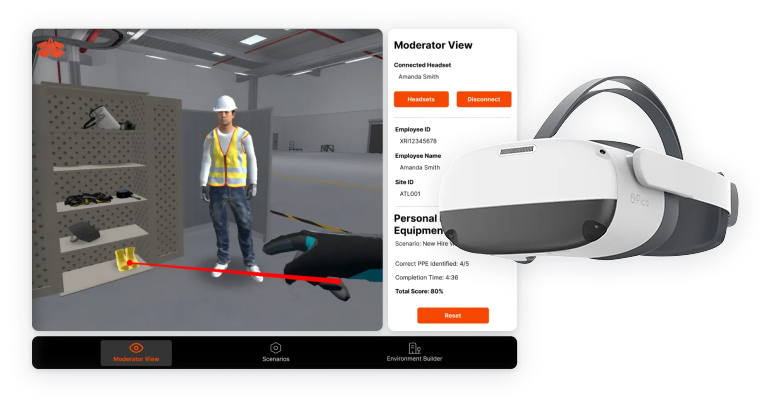
Successfully Start and Scale Your XR Program
We meet with your team to identify high-impact training opportunities, define success metrics, and understand your operational realities.
Align on Your Training Goals
We meet with your team to understand fixture challenges, rollout goals, and operational gaps.
Build Your XR Rollout Plan
We help you select the right headsets, content strategy, and deployment approach — all tailored to your sites, teams, and scale.
Launch & Manage with Confidence
From device setup to content deployment, ArborXR gives you the tools to train your workforce faster with full visibility, support, and control.
The Future of XR is Already Here
But launching a successful program takes more than just headsets and content.